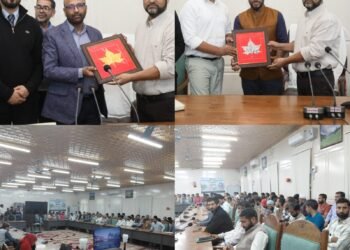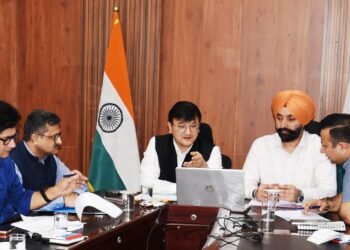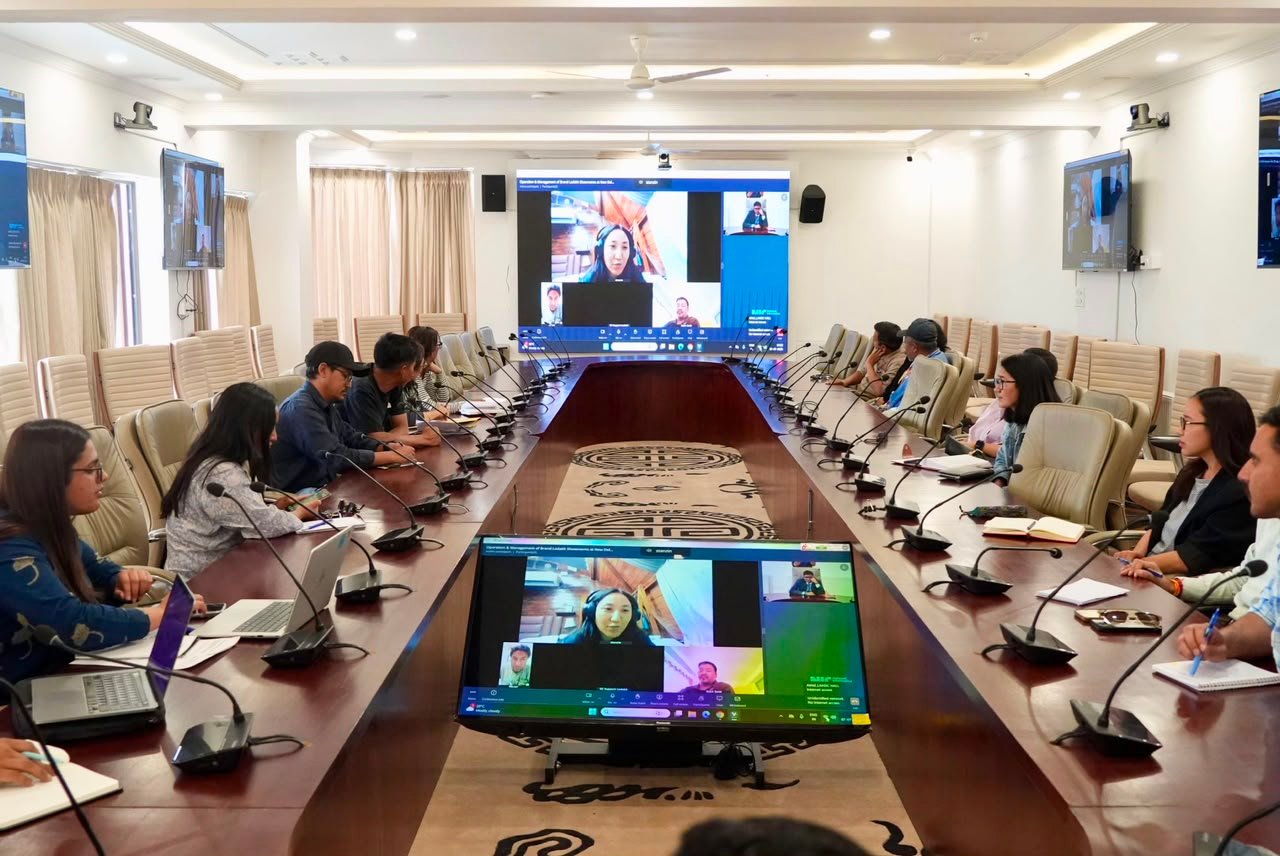
Leh, July 7, 2026: Administrative Secretary, Industries & Commerce Department, UT Ladakh, Shri Himanshu Gupta, chaired a comprehensive meeting with entrepreneurs, designers, artisans, and officials to deliberate on the effective operation and management of the Brand Ladakh showroom in New Delhi.
The meeting aimed to formulate a collaborative strategy to transform the showroom into a vibrant marketing and promotional platform for Ladakh’s premium handicrafts, handloom products, pashmina, traditional crafts, and other indigenous products.
The meeting was attended by representatives of several prominent Ladakhi enterprises and brands, including Namza, Metal Craft, Superb Ladakh Pashmina, Nomadic Woollen Mills Pashmina, Virtually Zanskar, and entrepreneurs from Kargil, among others. Senior officers of the Industries & Commerce Department also participated in the discussions.
At the outset, Shri Himanshu Gupta welcomed the participants and explained the objective of convening the meeting. He stated that the Brand Ladakh showroom in New Delhi holds immense potential to serve as a flagship platform for showcasing and marketing authentic Ladakhi products in one of the country’s largest consumer markets. However, he observed that the showroom has not been utilized to its full potential in recent years. He emphasized the need to revitalize the showroom through active participation of local entrepreneurs so that it becomes a professionally managed retail space capable of promoting Brand Ladakh while generating sustainable business opportunities for artisans and producers.
The Administrative Secretary informed the participants that, under the vision and guidance of the Hon’ble Lieutenant Governor of UT Ladakh, the Administration is committed to revamping the Brand Ladakh showroom in New Delhi into a vibrant and professionally managed platform for promoting authentic Ladakhi products. He stated that the initiative aims to strengthen the Brand Ladakh identity, improve market access for local artisans and entrepreneurs, and create sustainable business opportunities by showcasing the region’s premium handicrafts, handloom products, pashmina, traditional crafts, and other indigenous products in one of the country’s largest consumer markets. He further emphasized that the Administration intends to develop a more entrepreneur-driven model, with local producers collectively showcasing their products under the Brand Ladakh identity, while the Department would facilitate operational support, including management, manpower, and other essential services, enabling entrepreneurs to focus primarily on production and marketing. He encouraged all stakeholders to share their suggestions and participate actively in developing an efficient and transparent operational framework.
During the meeting, the Director, Industries & Commerce, informed the participants that the UT Administration would provide a 50 percent transport subsidy for products collectively dispatched to the New Delhi showroom, thereby reducing logistical costs and encouraging greater participation from local entrepreneurs.
The entrepreneurs welcomed the initiative and appreciated the Administration’s efforts to strengthen market access for Ladakhiproducts. They highlighted the challenges they currently face in accessing wider markets and agreed that the Brand Ladakhshowroom could become an effective platform for increasing visibility and expanding business opportunities. They stressed the importance of professional branding, marketing, promotional campaigns, and improved product presentation to attract a larger customer base.
Several participants suggested that the showroom should be managed by a dedicated professional responsible for branding, marketing, advertising, and overall coordination. They proposed that such a resource person could be selected or appointed with the consent of participating entrepreneurs to ensure smooth day-to-day operations while maintaining trust and accountability.
The officials agreed that the management structure should be practical, transparent, and capable of maximizing the showroom’s potential.
The entrepreneurs also raised concerns regarding operational expenses, including rental costs, manpower, monthly sales performance, and payment mechanisms. They sought clarity on revenue generation, turnover expectations, and financial sustainability of the showroom. In response, the Administrative Secretary explained that the objective was to create a commercially viable platform where premium Ladakhi products receive adequate visibility and generate better returns. He stated that the Department would develop an appropriate operational model after considering all suggestions received during the consultation.
Officials informed the participants that housekeeping, cleanliness, maintenance, and other support services would be managed professionally so that entrepreneurs could concentrate on product development and sales. Discussions also covered showroom interiors, display systems, space allocation, and methods to enhance the overall customer experience while preserving the identity of Brand Ladakh.
The participants emphasized that the showroom should primarily feature authentic handmade products, including textiles, handicrafts, pashmina, and other premium products that reflect Ladakh’s unique cultural heritage. They also recommended introducing digital authentication and certification mechanisms to assure customers of product authenticity. Entrepreneurs further suggested that products displayed at the showroom should be selected based on market demand and seasonal suitability, particularly considering New Delhi’s climatic conditions, so that inventory remains relevant and sales improve throughout the year.
The Administrative Secretary appreciated the valuable suggestions and assured the participants that all recommendations would be carefully examined before finalizing the revised operational framework. He also informed the gathering that the Administration is actively working towards strengthening the Brand Ladakhidentity, expanding market linkages, and facilitating Geographical Indication (GI) registration for eligible products to further enhance their market value and authenticity.
He requested the entrepreneurs to submit any additional suggestions or proposed modifications within the next two weeks so that the revised management model can be finalized in consultation with all stakeholders.
Shri Gupta also emphasized that payment systems should be transparent, with sales proceeds being credited directly to the respective entrepreneurs’ accounts through a digitally integrated mechanism. Participants additionally suggested showcasing traditional Ladakhi pottery and other emerging craft products, to which the Administrative Secretary responded positively, assuring that the proposal would be examined as part of the showroom’s expansion strategy.